Interactive experiences
Three 3D worlds. You cross the first with the mouse, it’s a guided meditation. In the second you stand in for Santa for one night, from your browser. The third is a mobile game where you walk an old lady across her own town.
On all three I did a bit of everything: the research and the personas, the screens down to their failure states, the 3D modelling and the art direction.
Three worlds in motion · hover to switch screentap to switch screen


Safe Place
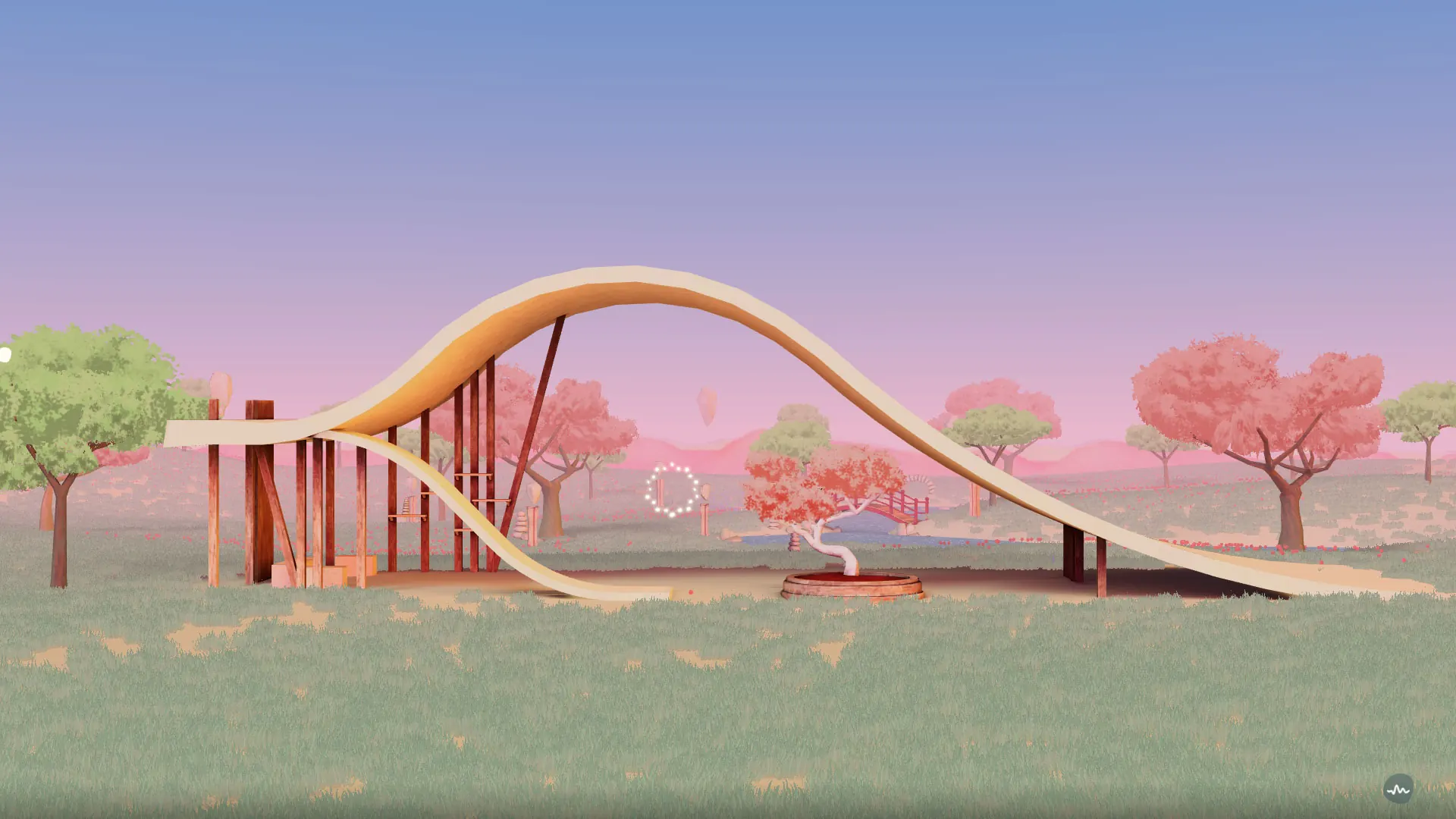
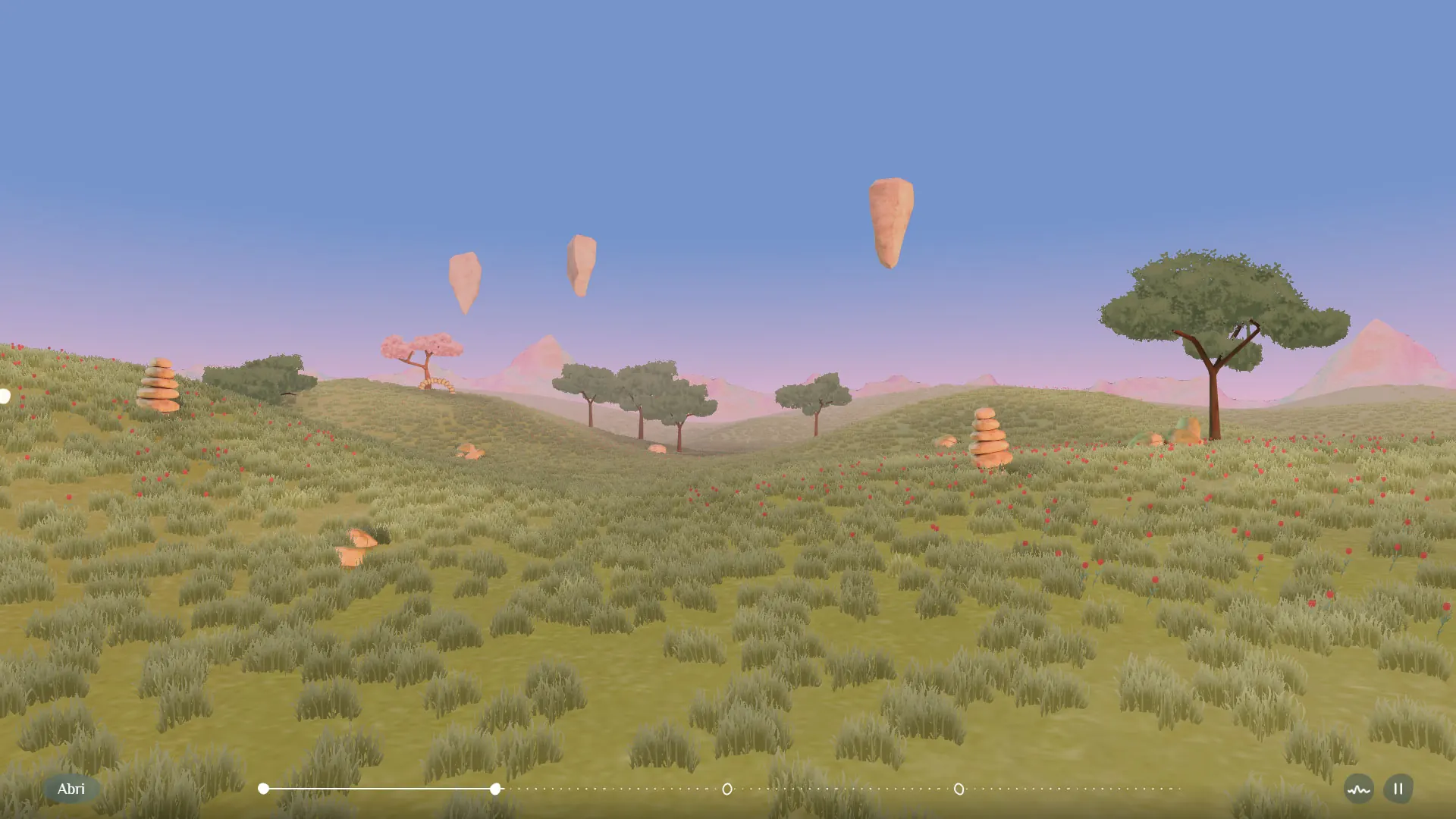
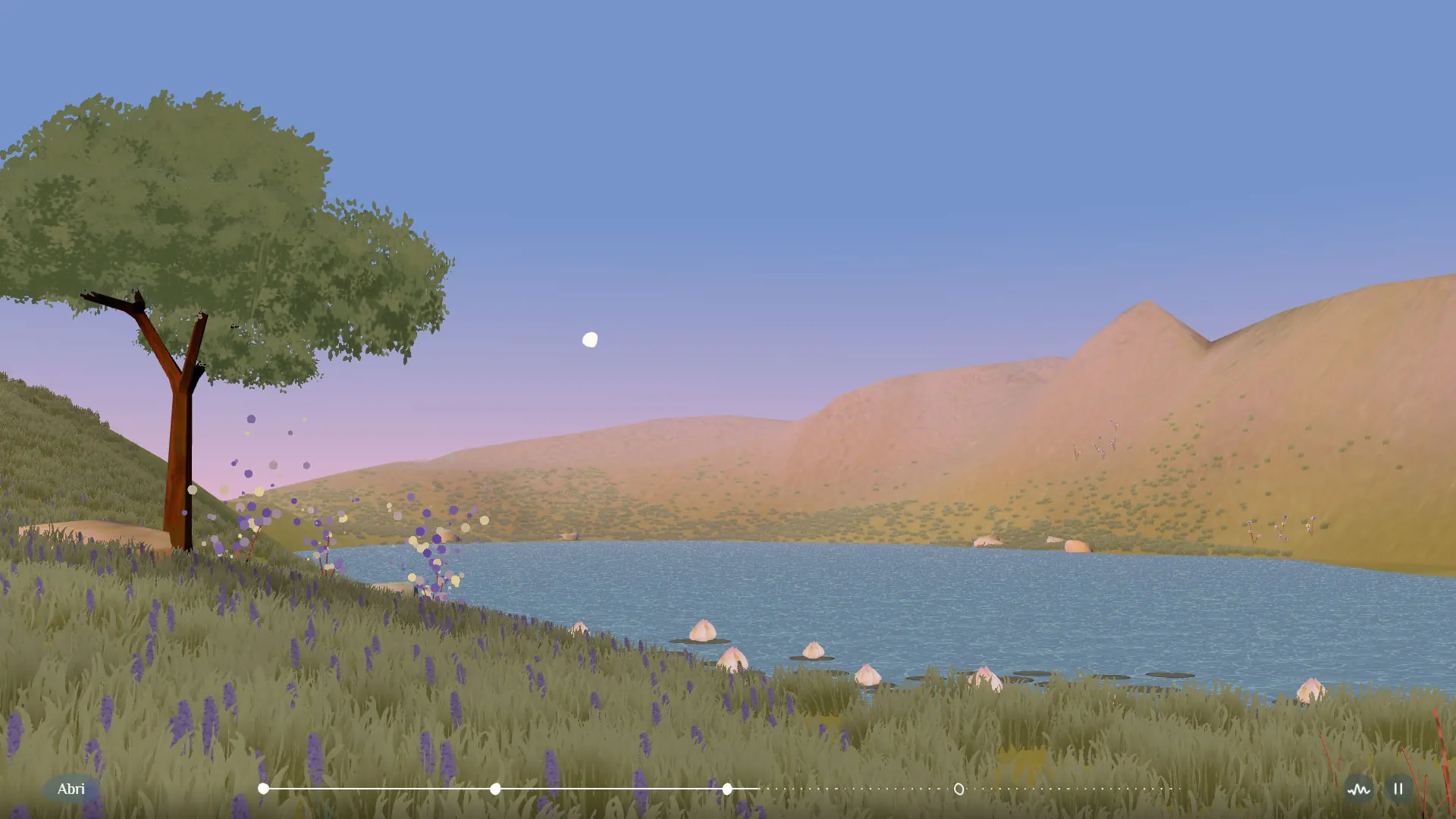
Safe Place is a meditation you walk through instead of listening to with your eyes shut. You arrive in a quiet landscape and a voice-over keeps you company while you move at your own pace: a meadow, a lake, a waterfall then a Japanese garden. Each place offers one breath and one thing to do with your hands.
We were talking to students on work placements who were juggling school and a job through lockdown and had no time left for themselves. Meditation apps already existed but every one of them asks you to close your eyes.
We looked for the opposite: hold the eye long enough for the head to let go. I worked on the audience and the benchmarks, then on the art direction with the team.
The walk
to move from one place to the next
An interface that gets out of the way
A contemplative experience can’t carry a chatty interface. Navigation comes down to a progress bar showing where you are and which places are still ahead. The name of the current stage sits bottom left and the sound and pause controls sit on the right. Nothing else lands on the image.
For the scenery we chose a soft pink and green palette, gentle volumes, not one hard outline or sharp drop shadow, and cairns left by the side of the path by those who came before. You had to be able to hold a look at every element. One shape too sharp and you were out of the state we were building.
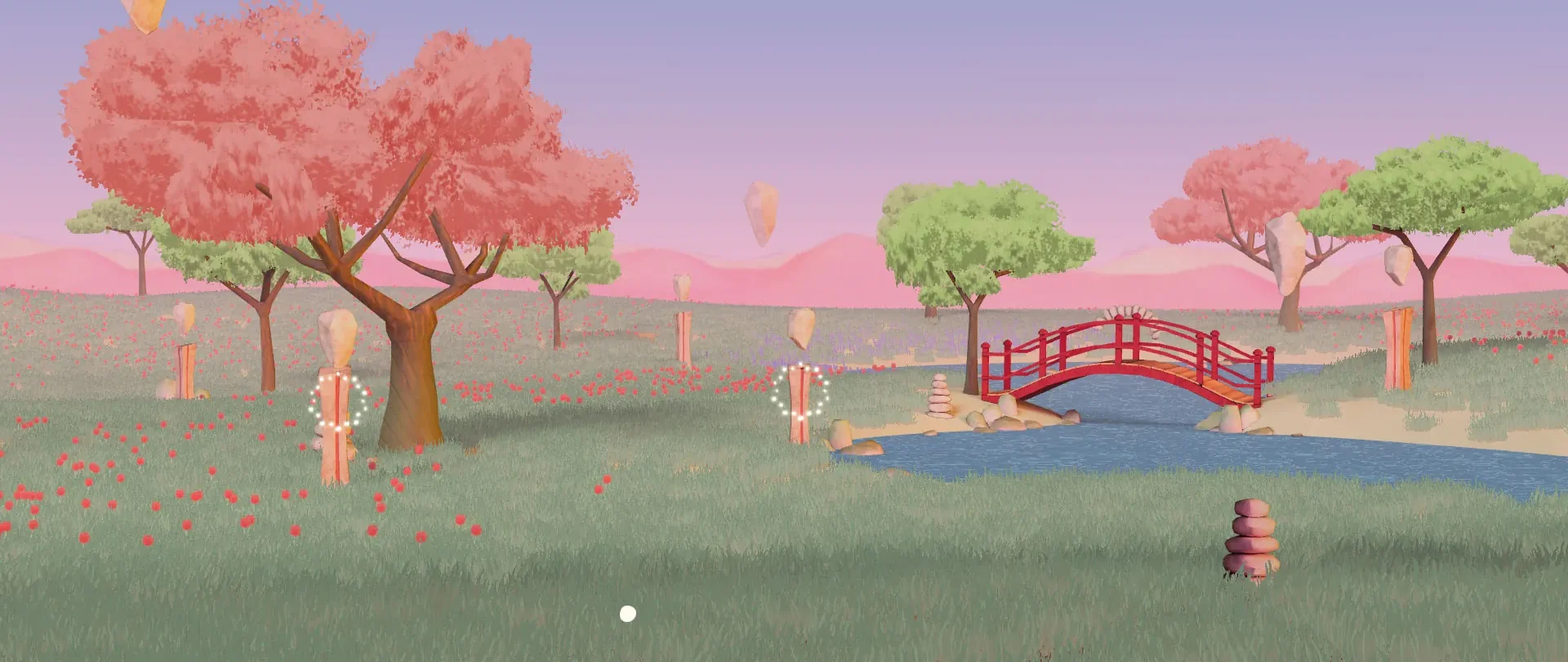
With Brieuc Caillot on development, Roxane Peuvrier, Léon Baudouin and Alexandre Gomez-Pardo. A desktop experience in real-time 3D, running in the browser.
Open the experience
Mission cadeaux express
Father Christmas caught a cold on Christmas Eve and can no longer do his round. You are appointed stand-in elf.
You have five minutes to leave the presents under the tree, switch off the objects that the magic dust has woken up and eat the cookies left on the table. All of it without waking the family asleep upstairs.
The flow, drawn before the screens
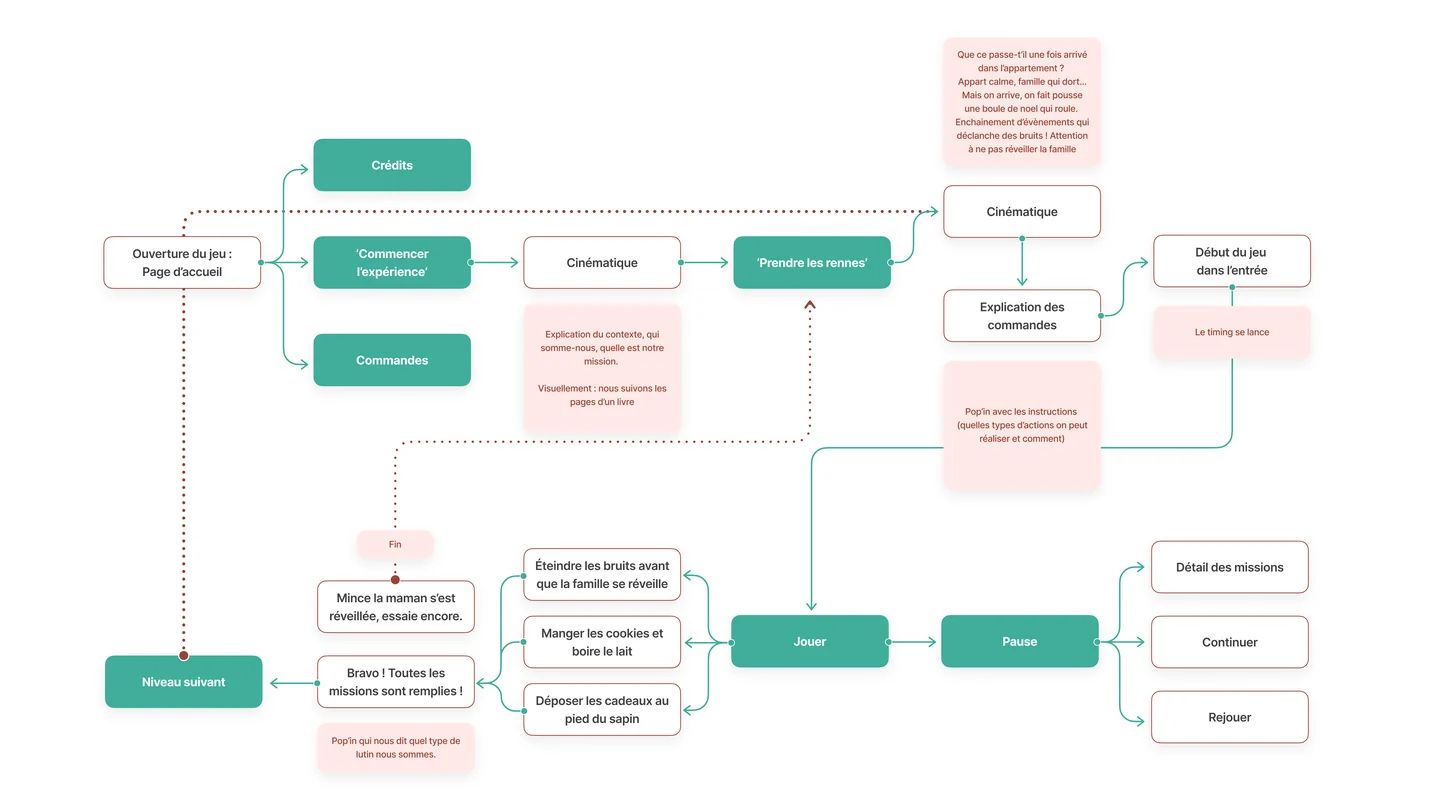
I drew the whole flow before anyone opened Figma: the home screen, the cut scene, the controls, the three missions, the pause and the two endings. That diagram doubles as a contract with the developers, to know which screen leads to which and what happens when you fail.
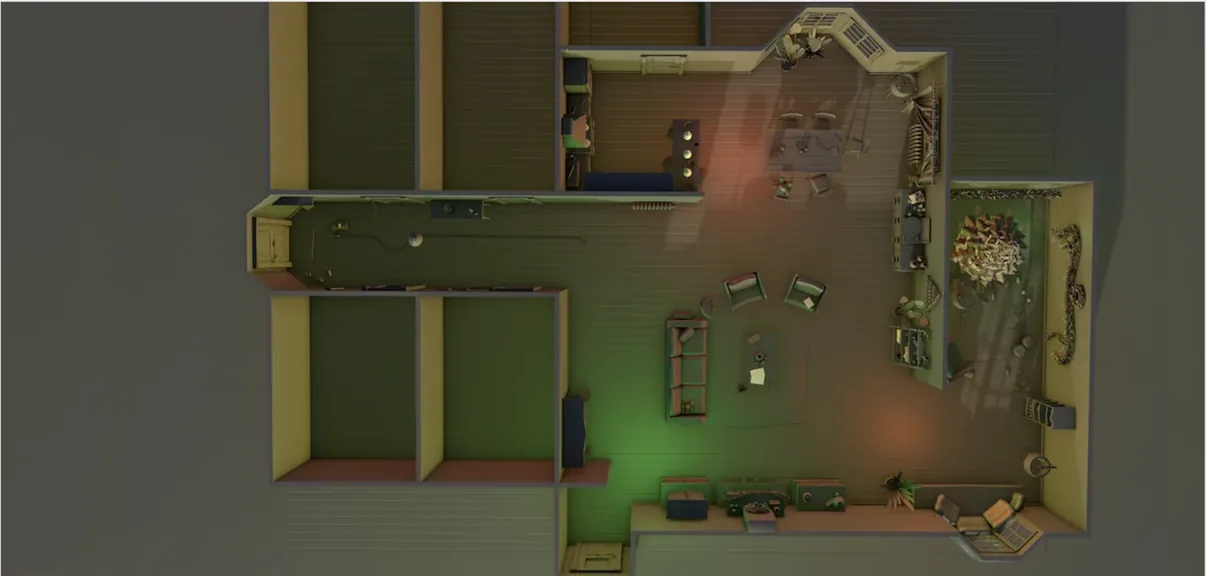
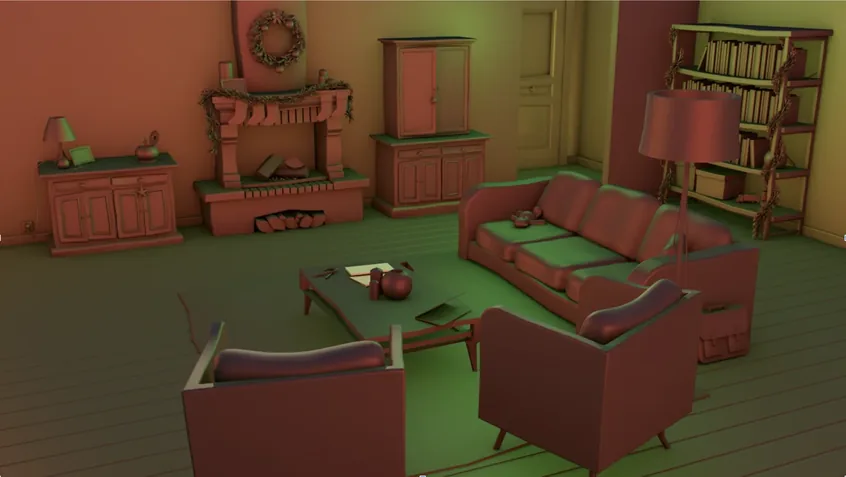
I also drew the flat’s floor plan then modelled the whole flat, room by room. Lighting took the most attempts because we needed a night dark enough to feel like one and readable enough to find the tree without turning the lights on.
Nothing gets in front of the room
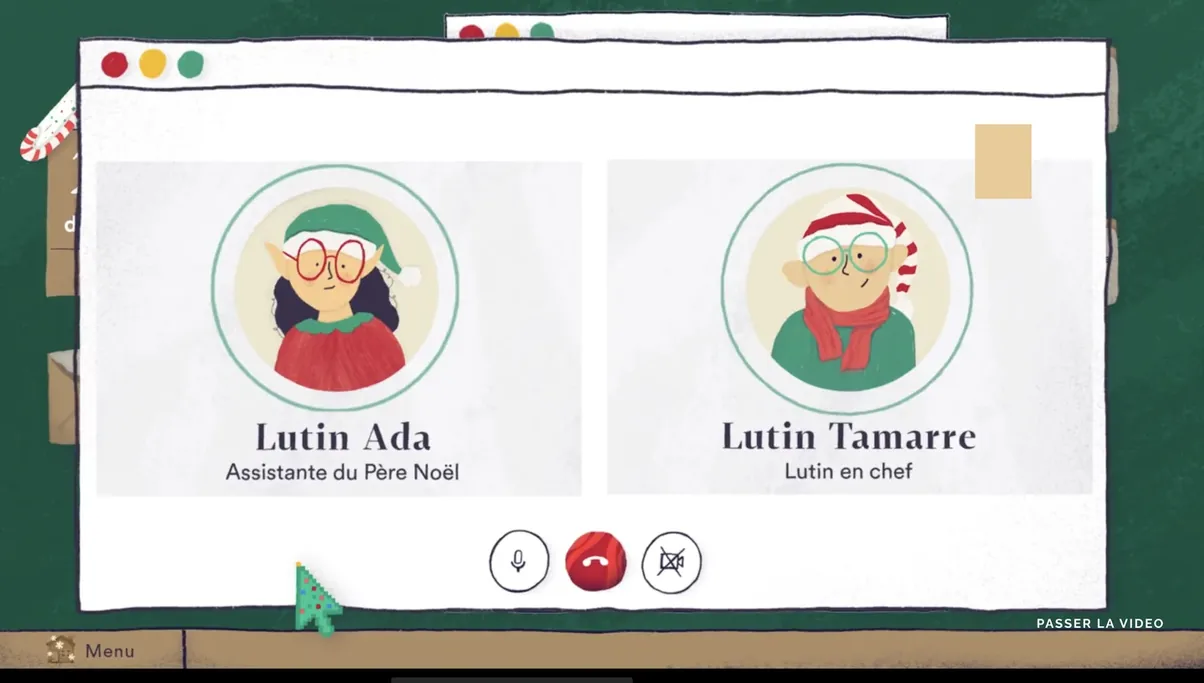
Everything laid over the scene obeys one rule: the interface tucks into the edges or gets out of the way. The briefing arrives by video call from Ada, Father Christmas’ assistant, and even the end screens sit on the set instead of replacing it.
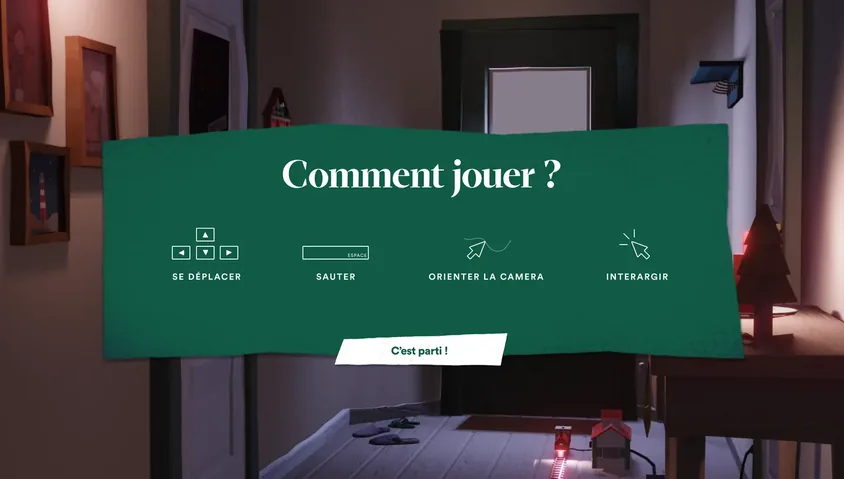
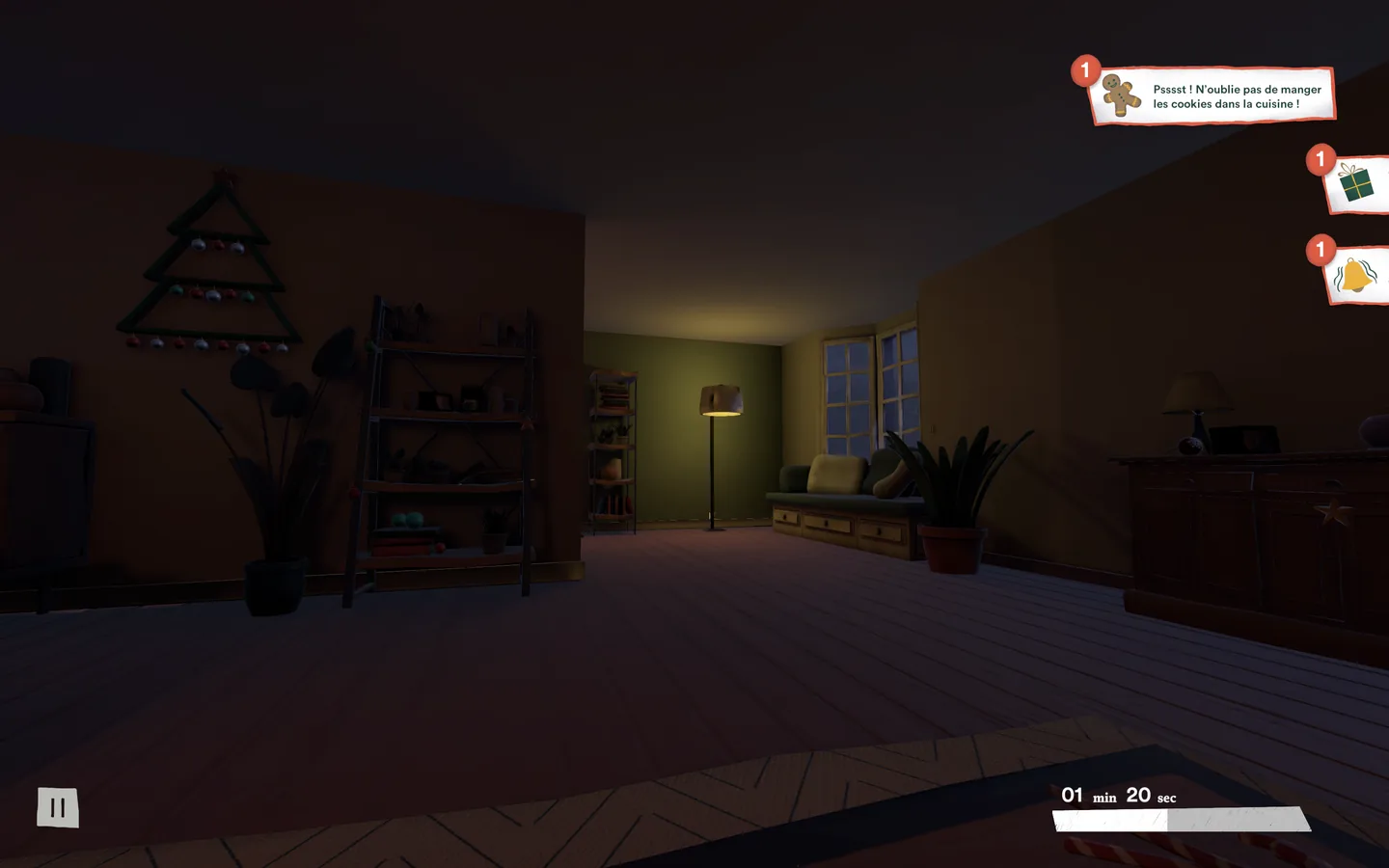
It runs in the browser, inside a flat modelled in 3D and lit by candlelight. Sound carries a lot of the game since it is what warns you when an object is making too much noise.
Inside the flat
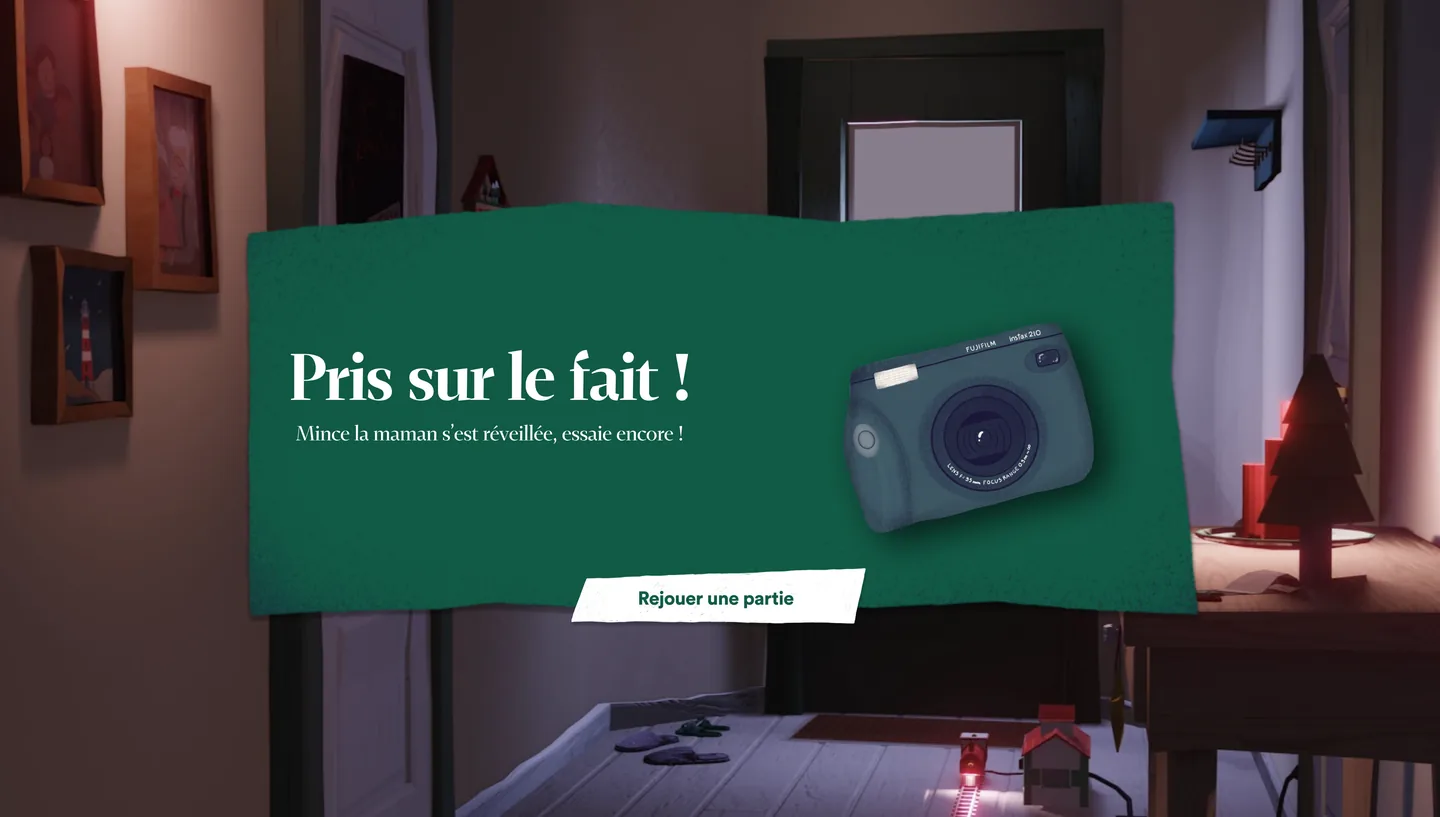
With Élodie Deshayes, Vincent Calas, Morgane Sauneuf and Thi Van An Truong. Five minutes of play, for children from ten and anyone who likes Christmas. The 2D and 3D videos are the work of the rest of the team.
Mamie Danger Playable
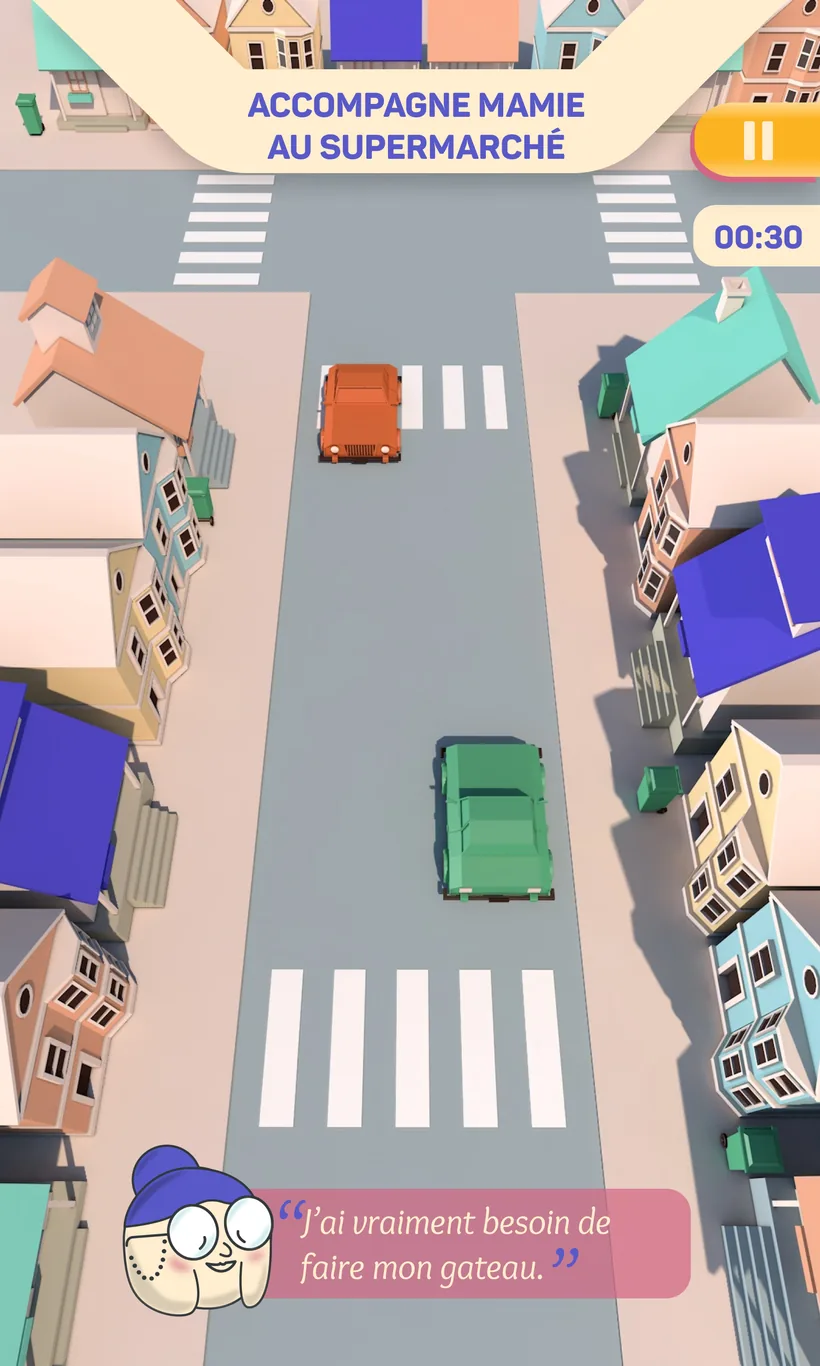
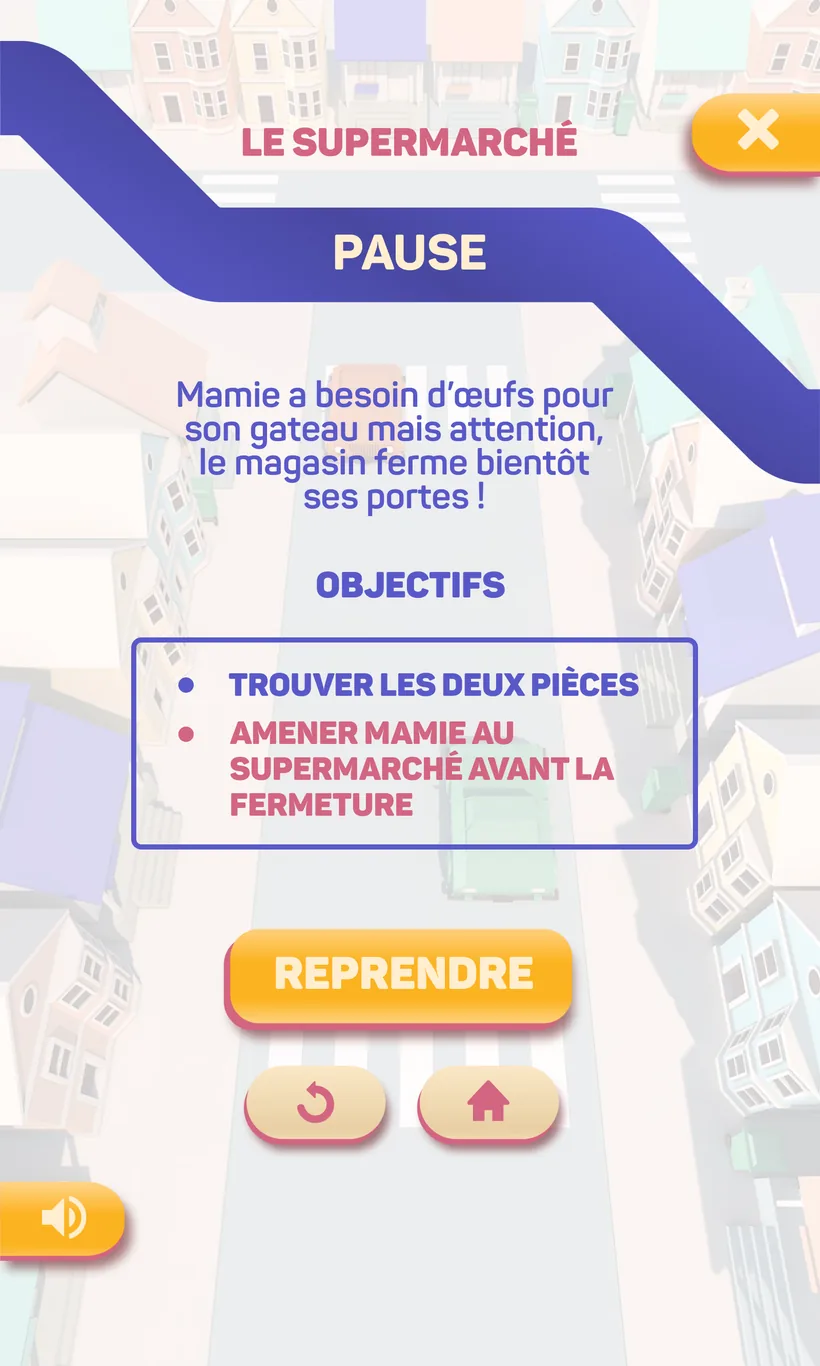
Mamie needs two eggs for her cake and the shop closes soon. It’s up to you to walk her to the supermarket across a town that won’t wait for her: cars that don’t slow down, lights that change too fast and a clock that keeps running.
The game is played in portrait, in short missions you pick from a board: the meeting, the supermarket then the bakery.
Mamie comments on everything
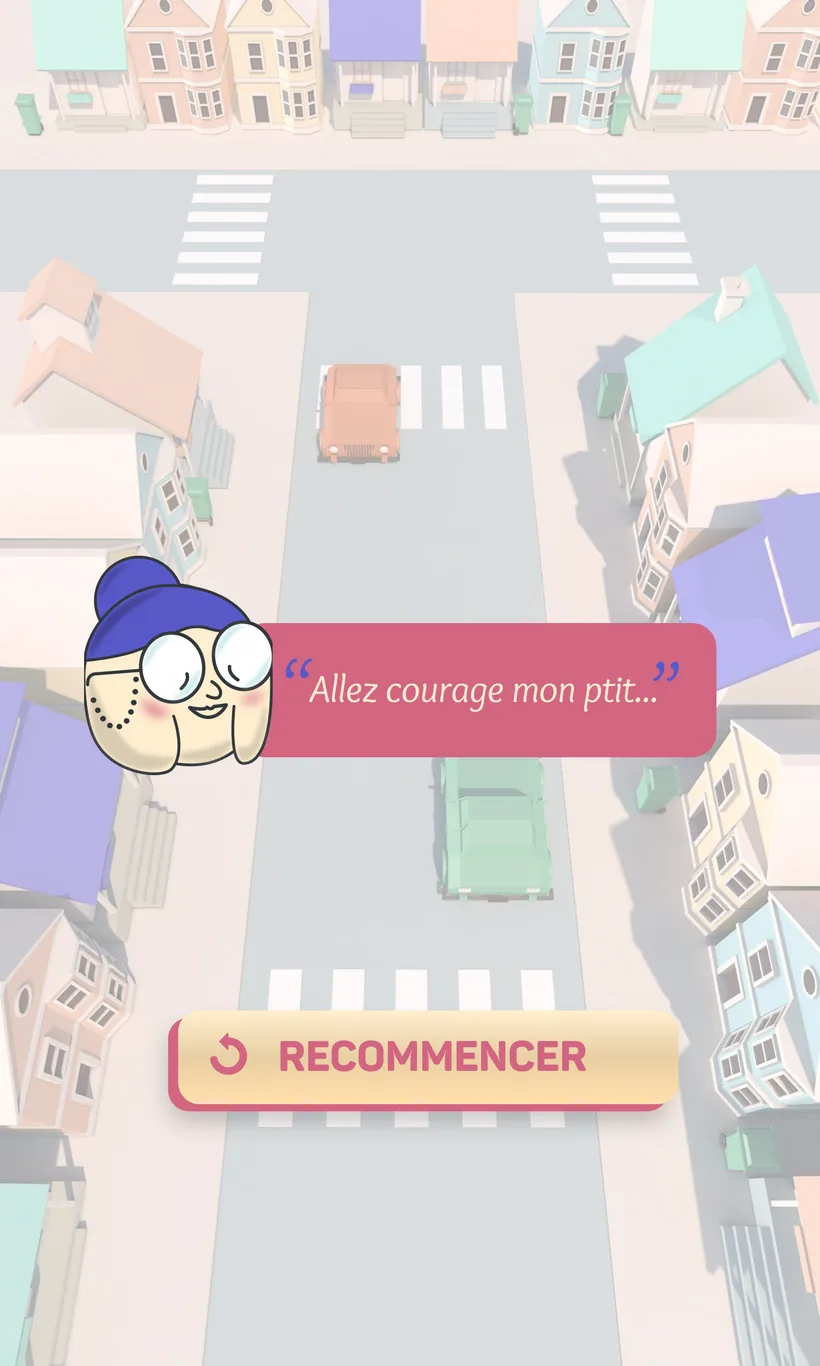
We started by writing our player instead of drawing: she lives in the city, spends a long time commuting and gives time to a charity. In the game, Mamie comments on everything, the wins as much as the failures, in her grandmother’s turns of phrase. Her lines stand in for every error message.
I designed the interface in that spirit, from the home screen to the end screens. The town stays visible behind every screen, because a thirty-second game can’t afford to send you to a full page.
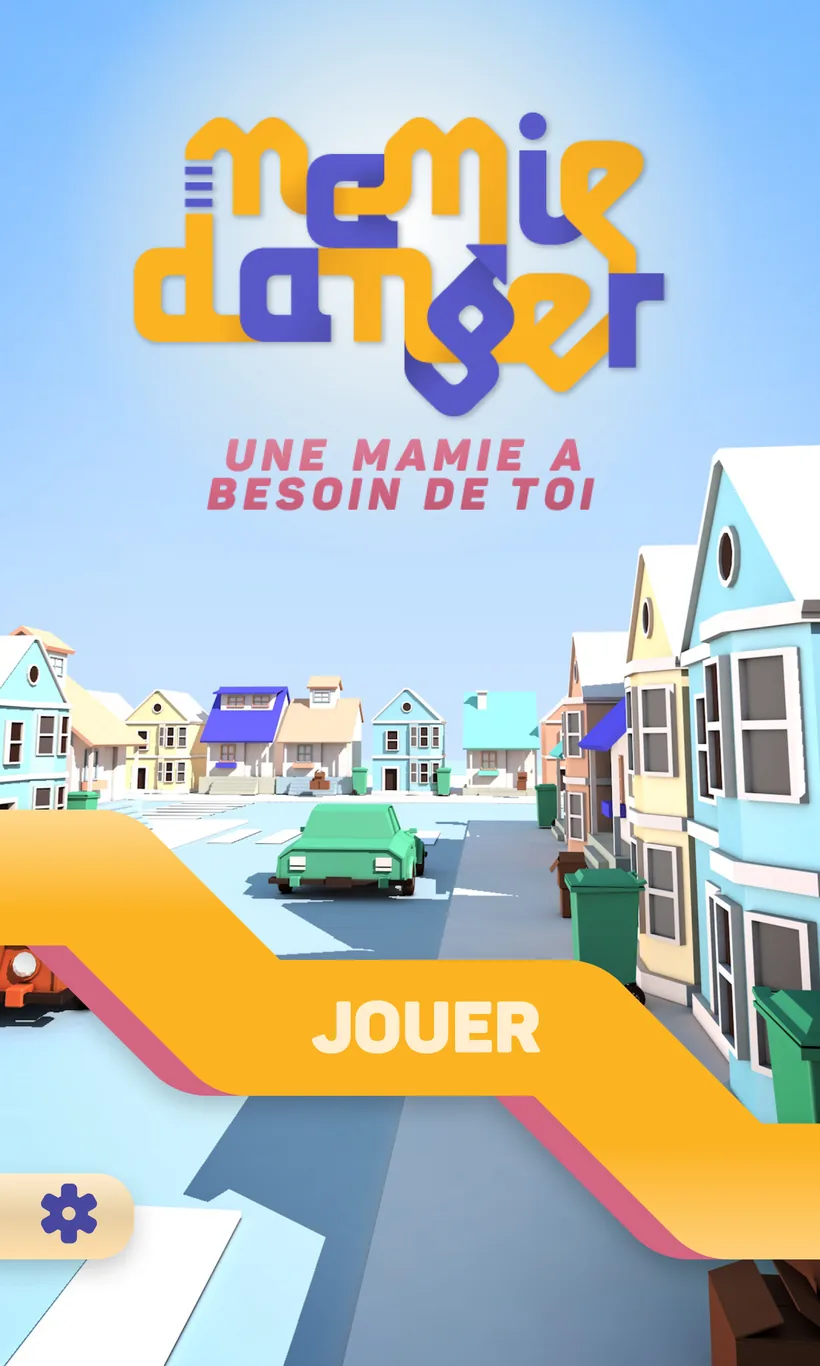
Screen 1 of 4
The home screen
One button, the town already behind it.
Scroll on to move forward, or click a thumbnail. The arrow keys and the trackpad work too.
The game can’t be installed anywhere any more. I rebuilt it in 2D to show what we had made, in a far simpler form. Play the 2D version
A town that stays welcoming even when it’s dangerous
The logo, the palette, the poster and the neighbourhood all come from the same intent: simple volumes, flat bright colours and no menacing shadow. The threat had to come from the traffic and not from the set, otherwise the game turned into a road safety lesson.
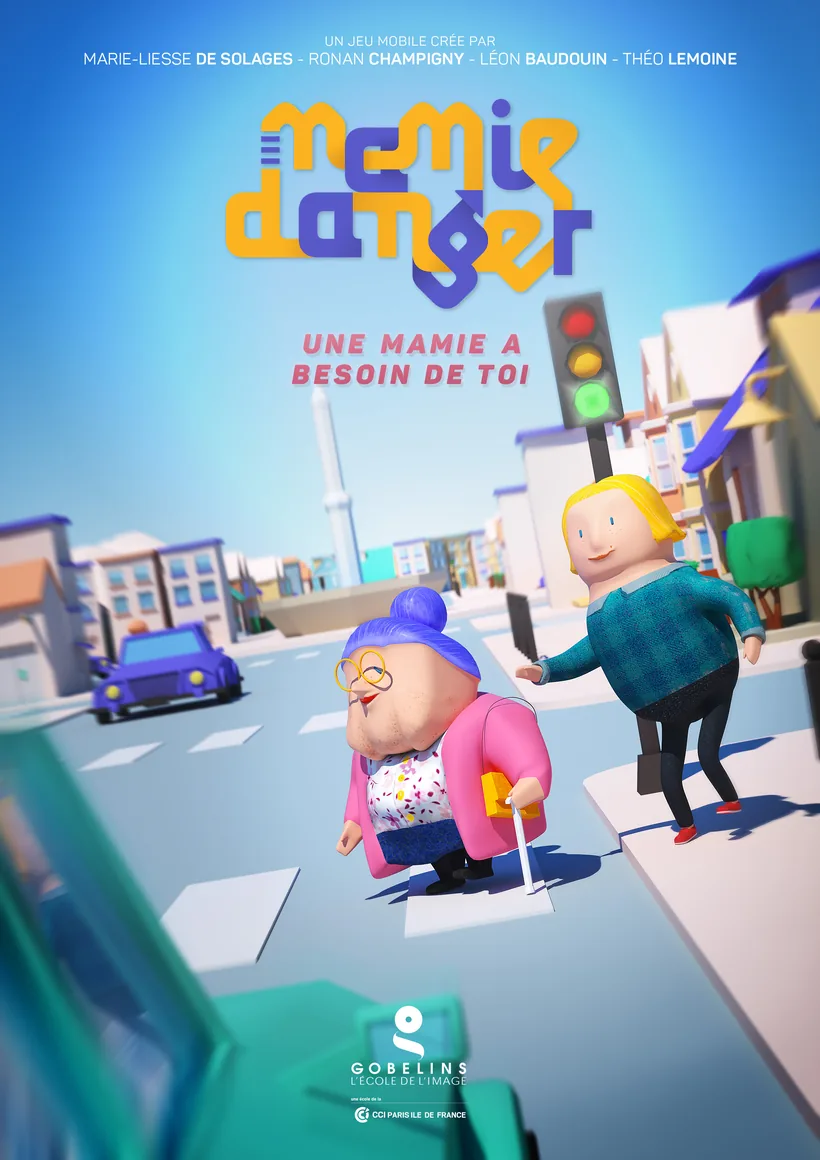
With Ronan Champigny, Léon Baudouin and Théo Lemoine, at Gobelins. A 3D mobile game built around thirty-second missions.
On these three projects I worked in a design pair, and I followed my own subjects from the first sketch to delivery. I had to choose a framing, hold it and explain it to our developers.
I do the same work today on products, with users I no longer get to choose.